
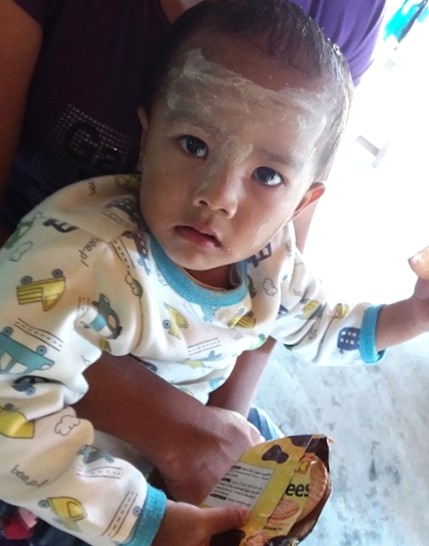
Rachel Stark, in a research done in 1986, found that during the first year of life, infants produce a growing range of sounds and begin to indulge in vocal play. These sounds will become closer and closer to the sounds of their language community. Here are the 5 stages of vocal development in the first year of life of an infant identified by Stark.
(1) From birth to 8 weeks of age.
Reflexive crying and vegetative sounds. This is the first stage of sound production of an infant.
(2) From 8 to 20 weeks of age.
Cooling and laughter. These sounds are produced in comfortable states and in response to smiling and talking by the caregiver.
(3) From 16 to 30 weeks of age.
Vocal play. At this stage, longer segments of sounds are produced which contain variation in pitch and stress as well as other aspects of sound control.
(4) From 25 to 50 weeks of age.
Reduplicated babbling. This is defined as a series of consonant-vowel syllables in which the consonant is the same for every syllable. For example, ‘dadadadada’ or ‘nahnahnah’. Reduplicated babbling does not seem to be used in communication with adults, although it may be a part of imitation games towards the end of the first year.
(5) From 50 weeks of age onwards.
Non-reduplicated babbling. In this stage, infants may produce vowel-consonant-vowel
combinations or consonant-vowel-consonant combinations. The components may vary within each series. Towards the end of this stage, stress and intonation patterns can be imposed on the babbling which give it a language-like ‘feel’.
Source: “Language Development” by Dennis Bancroff. Published by Blackwell Publishers Ltd.
Discover more from Welcome to My World of Travel
Subscribe to get the latest posts sent to your email.